
Factory Farming
Factory farming is not farming with a bigger barn. It is a system — industrialized, subsidized, protected, and marketed to look much more natural than it is.
Over the last several decades, animal agriculture has become increasingly consolidated, mechanized, and hidden from public view. What many people picture as “farming” often has little to do with how most animals are raised, confined, transported, and slaughtered in today’s food system. It is called factory farming for a reason.
Seeing through that system takes work, because the story we are sold is carefully constructed: green pastures, family farms, happy animals, patriotic language, and food labels designed to reassure more than reveal. Meanwhile, the government agencies involved in overseeing agriculture also have a mandate to support agricultural markets and industry stability — creating a system where regulation, promotion, subsidies, and political influence are deeply tangled.
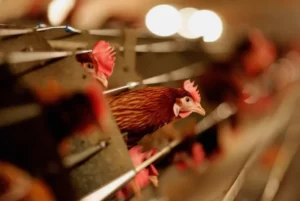
The USDA allows food producers to use terms like “humanely raised” for industry-standard practices – essentially, factory farming. The research of the nonprofit Animal Welfare Institute (AWI) suggests that this flies in the face of what most people want and expect. 80% of consumers in a recent survey did not consider these types of conditions to be genuinely humane.
By Christine Ro, Forbes
Public dollars help hold this system in place, from crop subsidies and insurance programs that support animal feed production, to disaster assistance, research funding, procurement programs, and industry-backed marketing structures. Over time, these policies have helped build a powerful lobbying force around the status quo — one that makes industrial animal agriculture seem inevitable, even when it is anything but.
Warren Underground exists to ask the questions the marketing hopes you won’t: Who benefits from this system? Who pays the price? And what becomes possible when we stop mistaking propaganda for common sense?
Under the Findings
The Economic Cost of Food Monopolies: The Dirty Dairy Racket
Published by: Food & Water Watch
Funded by: Public Donations
Warren's Take
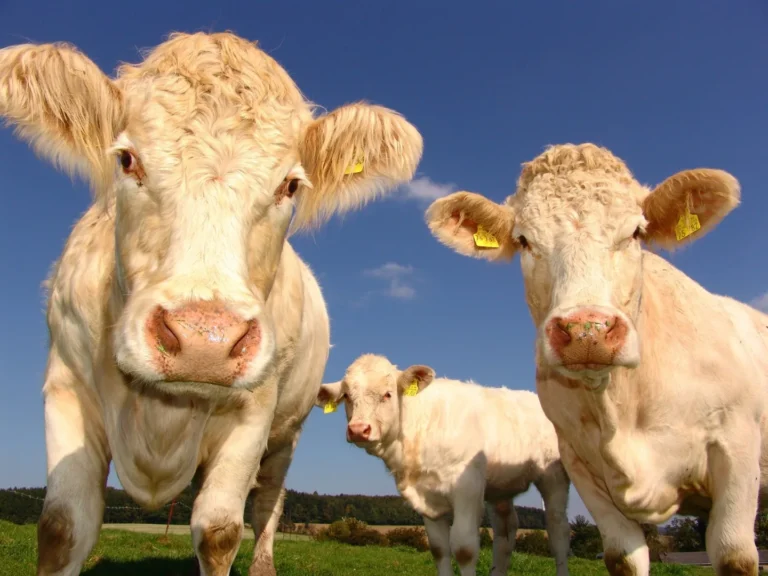
Since 2000, the average U.S. dairy farm has been profitable exactly twice. Three cooperatives control 83% of milk sales; in the same period, 70% of family-scale dairies closed. Real milk prices fell 20% while grocery prices rose, and efficiency gains went to processors rather than consumers. Methane from dairy manure doubled as factory operations replaced pasture farms. Congress wrote price supports out of the farm bill, one reauthorization at a time.

Affective Beliefs Influence the Experience of Eating Meat
Author(s): Eric C. Anderson, Lisa Feldman Barrett
Published by: Plos One
Funded by: No External Funding
Warren's Take
When people learn their meat came from a factory farm, it tastes worse — literally. In controlled studies, identical meat was rated as saltier, greasier, and less enjoyable, and participants ate 8% less of it. Positive “humane farm” framing changed nothing. Bad sourcing degrades the experience; good-news messaging doesn’t recover it. Transparency about harm is a stronger lever than spin.
The Wider Context
Most young farmworkers are children of immigrants. These families are reluctant to complain about conditions for fear of being deported.

By Robert J. Lopez, LA Times
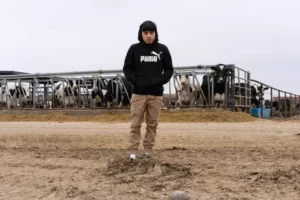
This year, the Department of Labor imposed a $1.5 million fine against Packers Sanitation Services, which provides cleaning crews to slaughterhouses. Investigators found that the company was employing more than 100 children, including 13-year-olds, to clean back saws and head splitters overnight.
By Hannah Dreier, The New York Times
And what we found is, really, the system is set up in a way that it’s not going to find children. Children work at night, and the auditors come in the morning. Children work with fake I.D.s. The auditors are checking paperwork, not actually speaking with children.

By Laura Barrón-López and Shoshana Dubnow, PBS